


Season 3 Idea Jam 6
Season 3 Recaps brought to you by our partner University of St. Thomas - Schulze School of Entrepreneurship
Clickable Chapters:

Spotlight Business for October 2026 - Season 3 - Idea Jam 6
Giften Market
What is Giften Market all about?
Giften Market does corporate and custom gifts. Founder and CEO Martha Krueger launched the company in 2019 after getting frustrated trying to find thoughtful gifts for people she cared about. Giften sources from 250+ independent makers, and its own Minnesota warehouse packs and ships every order. Companies use it for moments like new hires, anniversaries, new babies, get well, sympathy, and client thanks.
Core Offerings
Giften Market brings together:
Curated gifts from 250+ independent makers
Full handling: kitting, gift wrapping, personalized gift messages, and shipping
Corporate gifting for the moments that matter, from new hires to client thanks
Fast fulfillment: 75,000+ gifts sent, out the door in one business day
What Makes Giften Market Special
Martha sums up the standard in one line: “Every box that leaves our warehouse is the gift I'd want to send.” The deck puts it another way: “A gift, not merch.”
End to end. Giften owns the whole job, so buyers can “focus on more important things.”
Small team, own tools. Giften is a “small team of seven” that builds its own tools, including a customer service agent named Joy that can fix a misspelled gift message “within 30 seconds”.
Recognition. Giften has been featured by NYT Wirecutter and is certified Women-owned (WBENC). Martha is a Tory Burch Foundation Fellow and Goldman Sachs 10,000 Small Businesses alum.
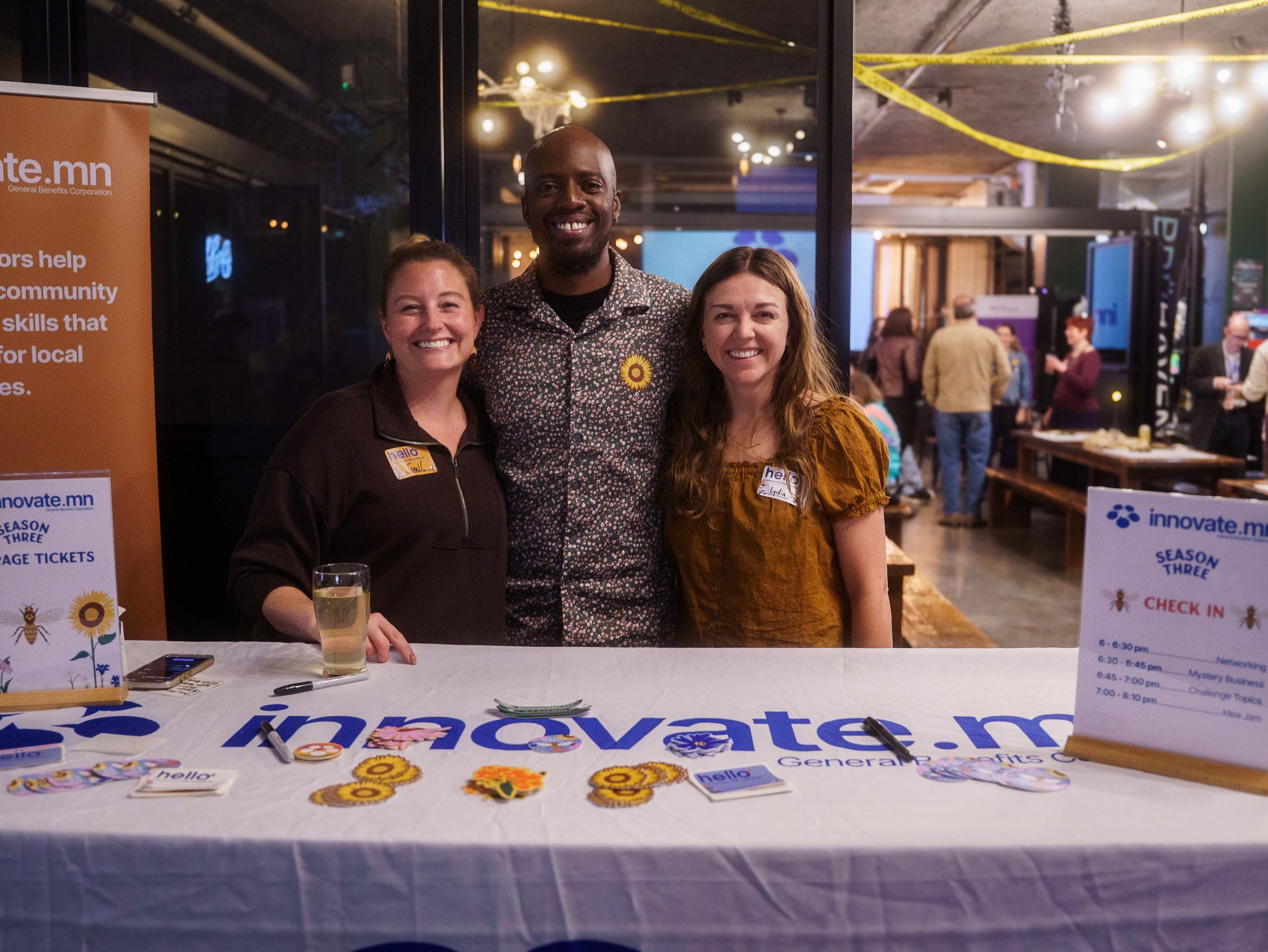
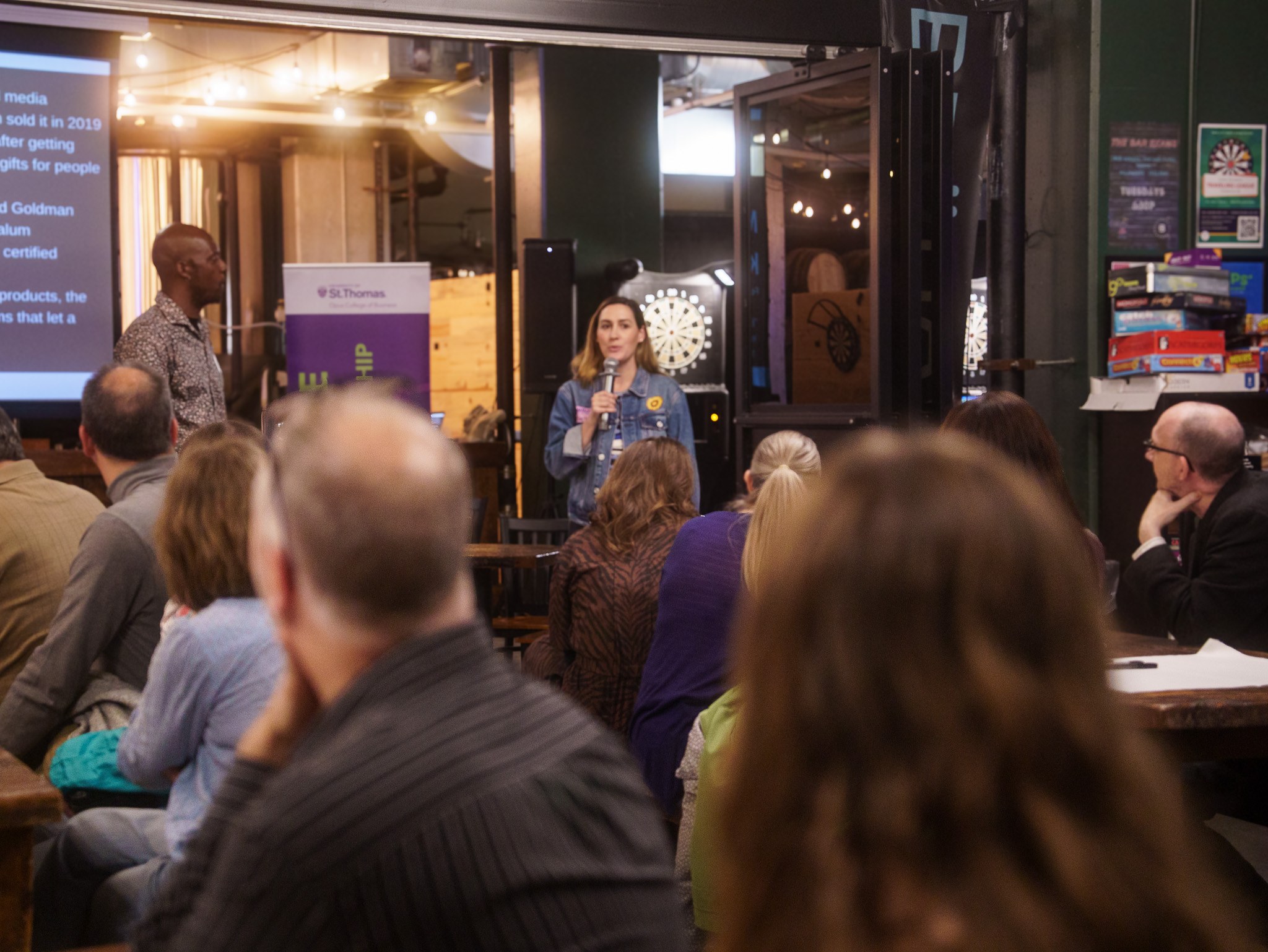
Event Pictures

















Event Deck
Problem Statement
Any business tied to a season knows this one. People remember you when the season arrives, then forget you for the rest of the year. A second trap often comes with it: customers see your most visible product, not the work behind it. The needs don't go away. Giften Market's version: companies think of Giften in December, even though, as Martha put it, “there's 10 other months of the year where there's all sorts of occasions and gifting needs.” And from the outside, Giften can look like a “pretty little box shop” when it is really a gifting operations partner. The challenge is getting the right decision makers to see both.
Idea Jam Summary
On October 29, 2026, approximately 30+ Members gathered at Brühaven for the Season 3 finale. Martha shared how Giften sources and ships, and named the competitor few businesses plan for: “I think our biggest competition is people doing nothing.”
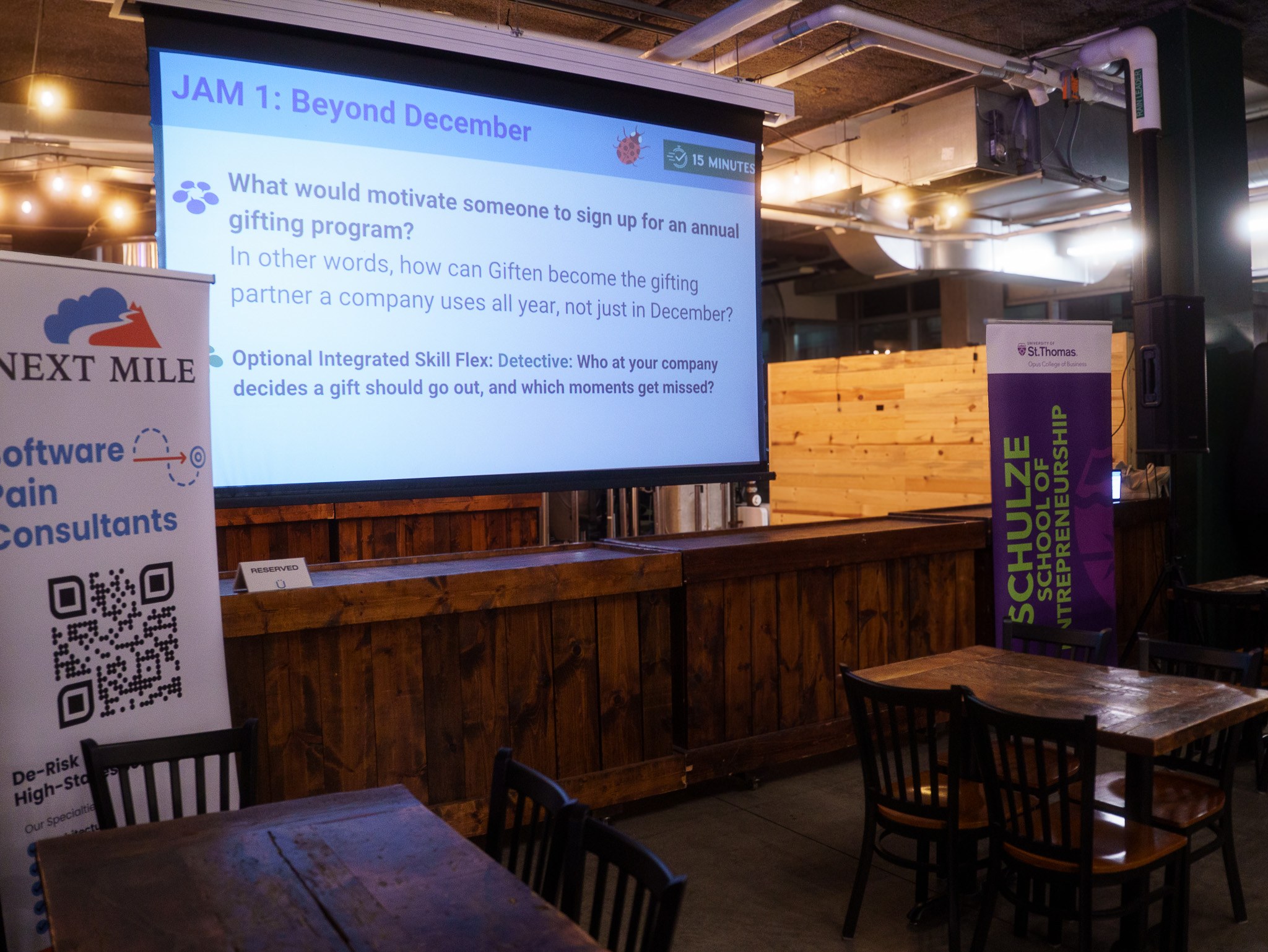
Members worked through two topics. Beyond December asked what would motivate someone to sign up for an annual gifting program. More Than a Gift Box asked what might convince you that Giften could run your company's whole gifting program.
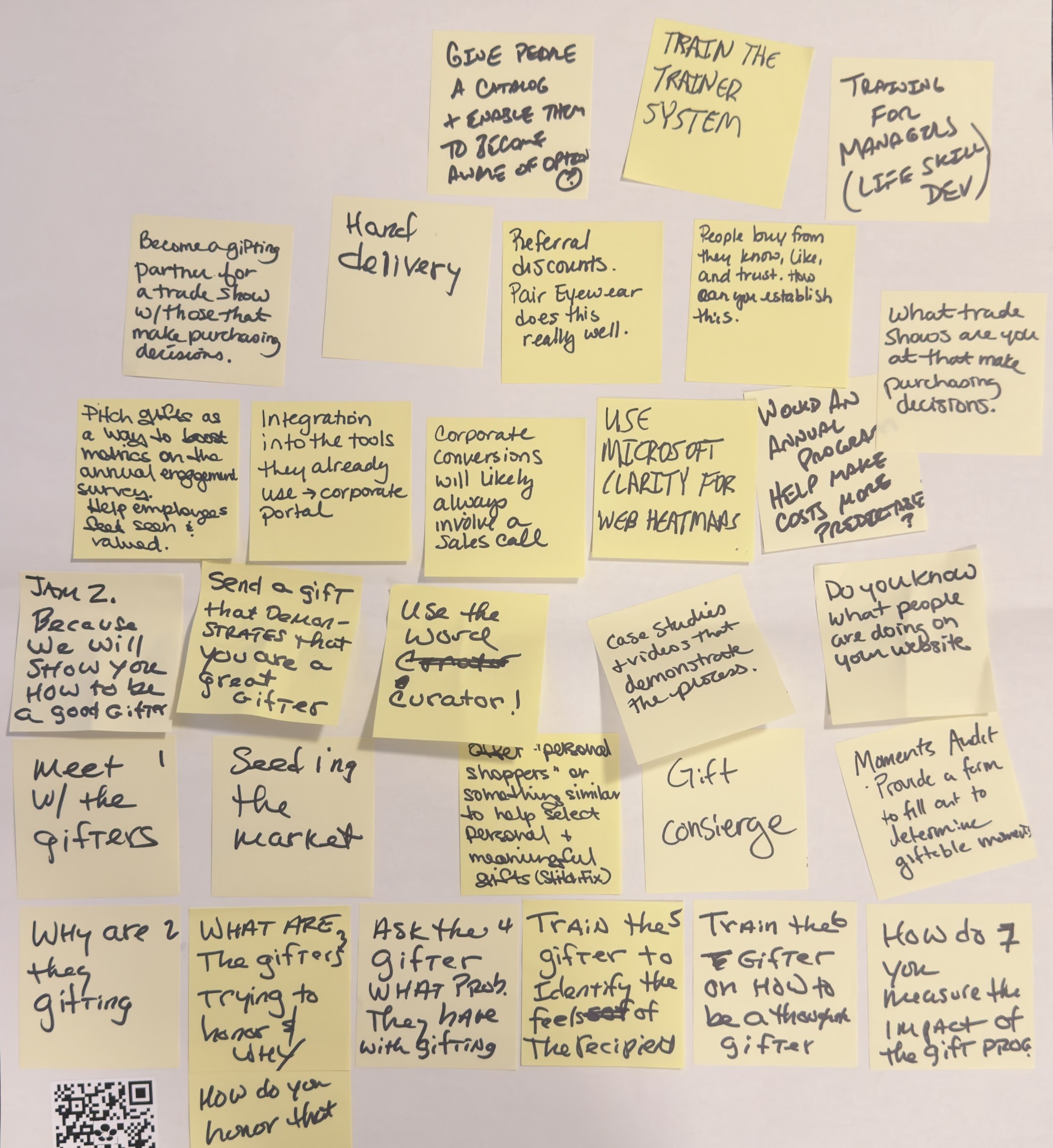
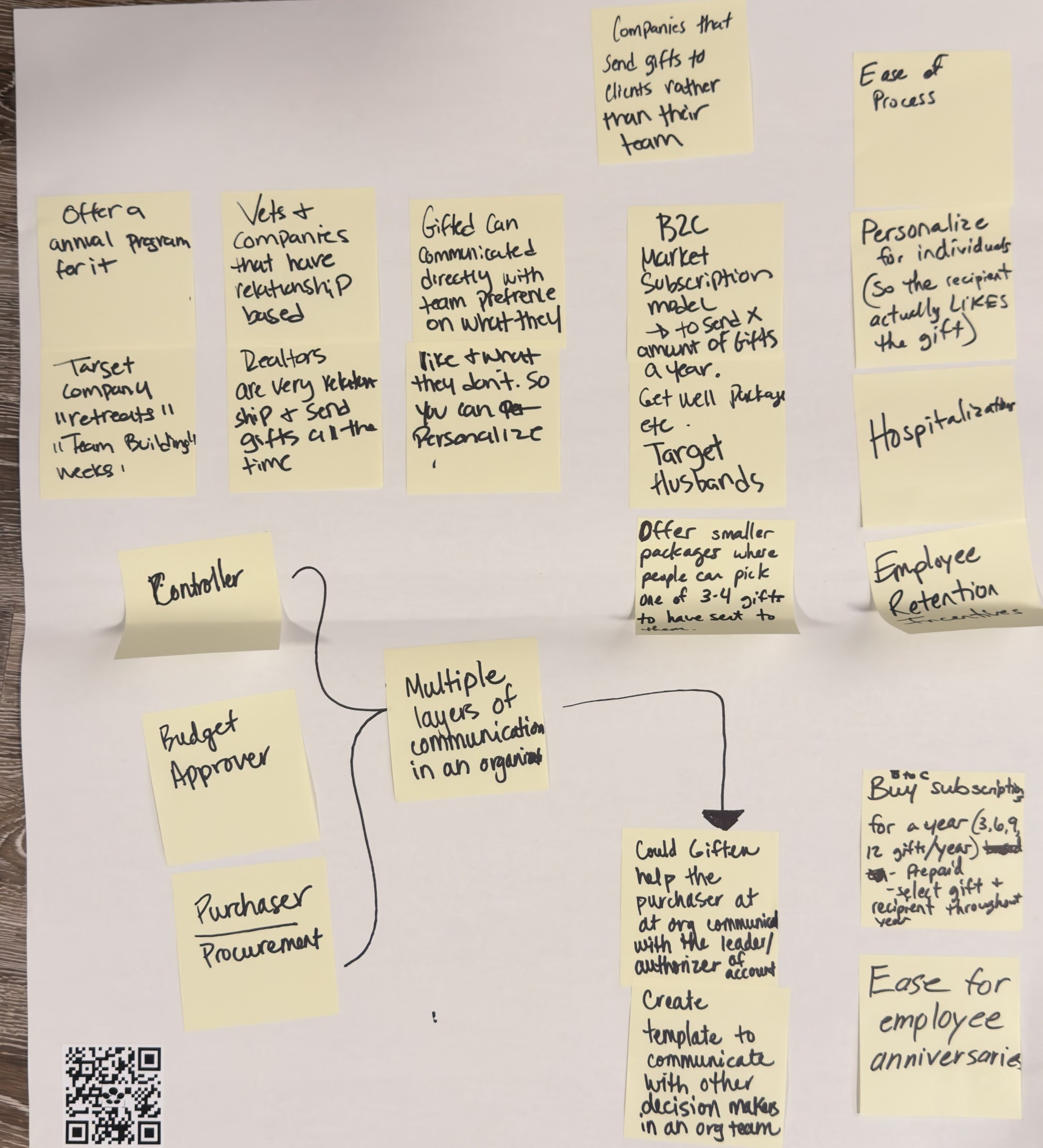
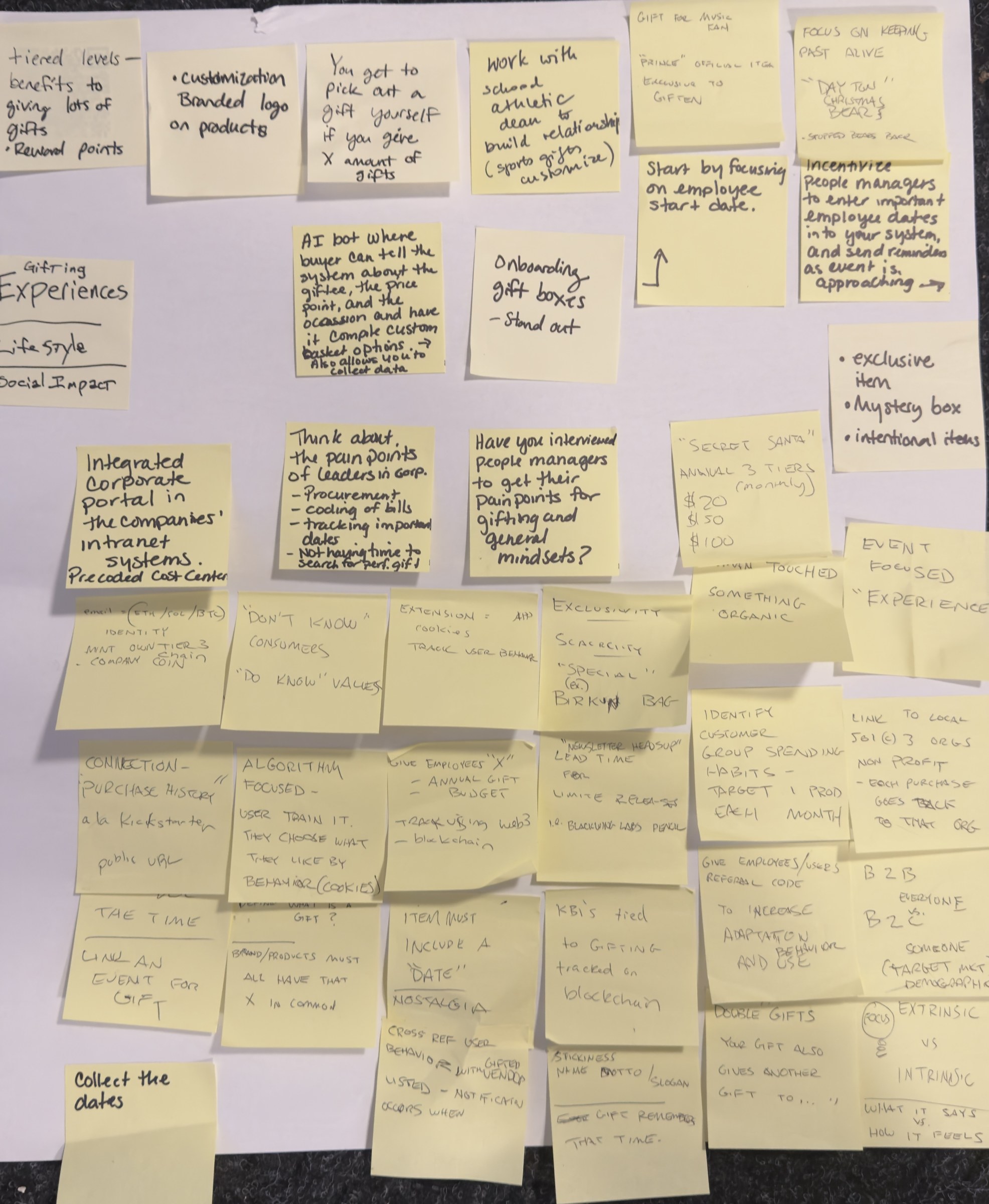
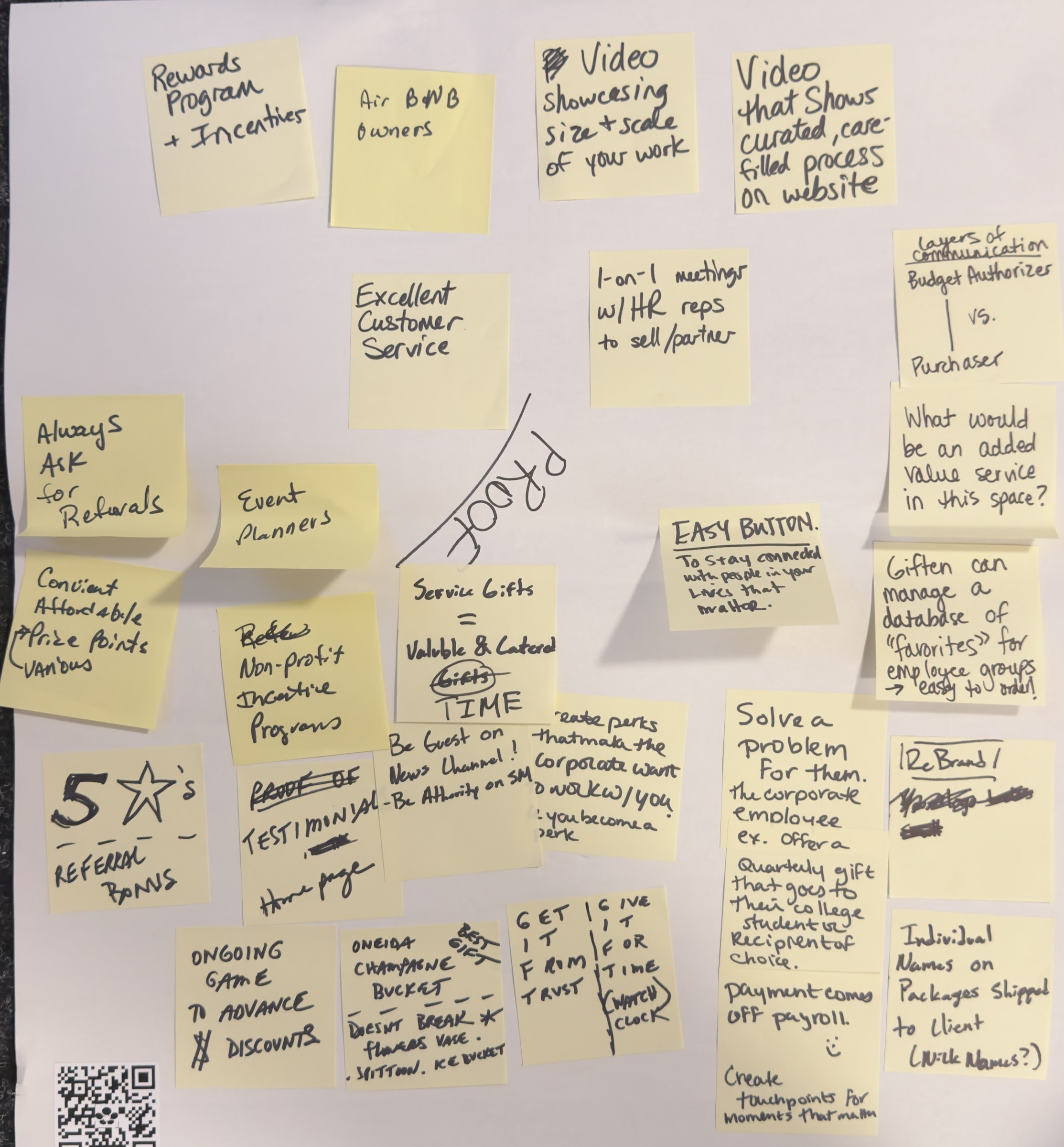
The room generated 267 ideas, most of them practical and specific. Two threads kept coming back: who inside a company actually decides to send a gift, and whether Giften could teach people to gift well, not just ship for them. Afterward, Martha said she was “buzzing with ideas and energy and post-it notes everywhere,” and pointed to “becoming like a trainer or a teacher of how to give a great gift” as an idea that resonated.
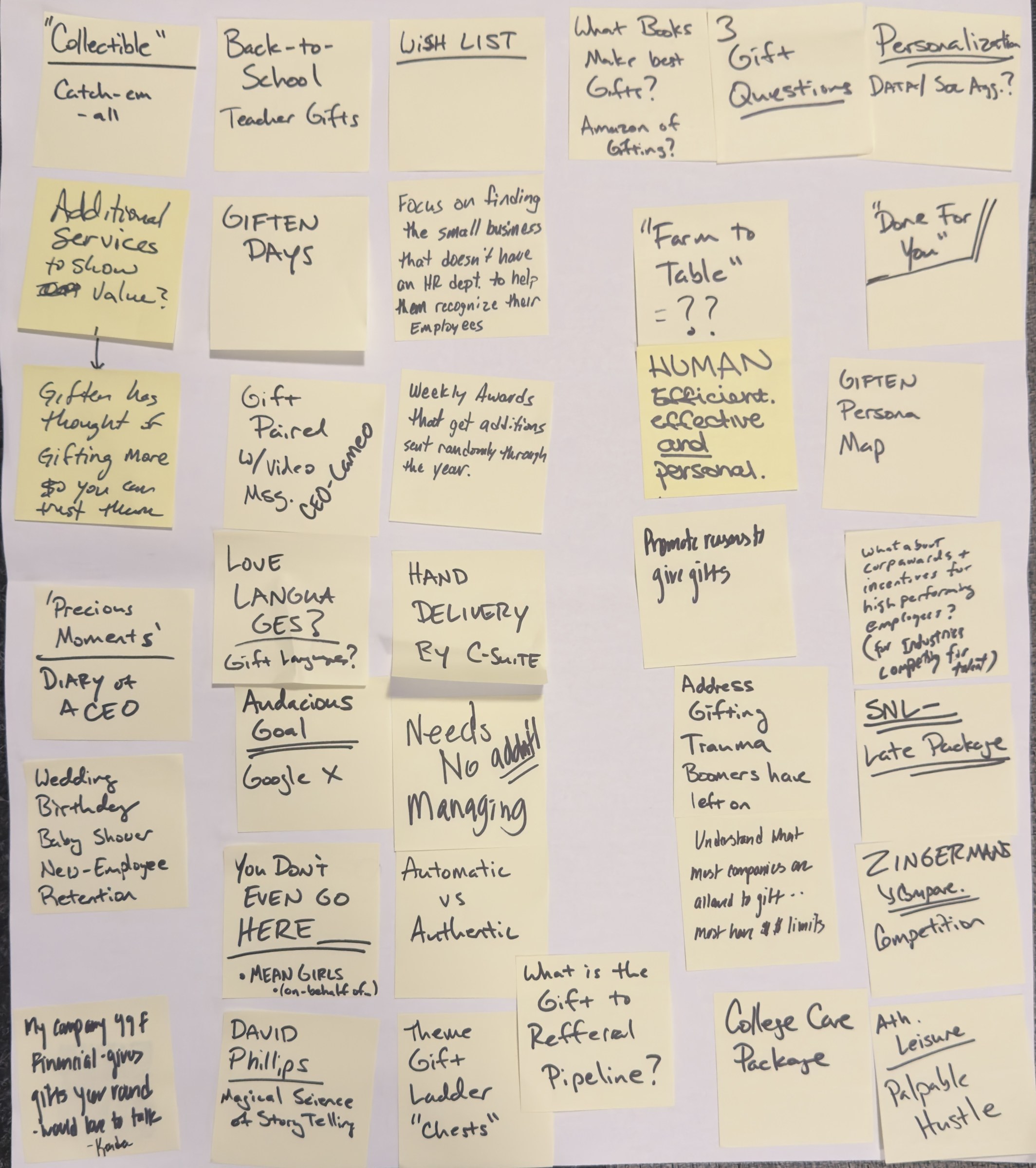
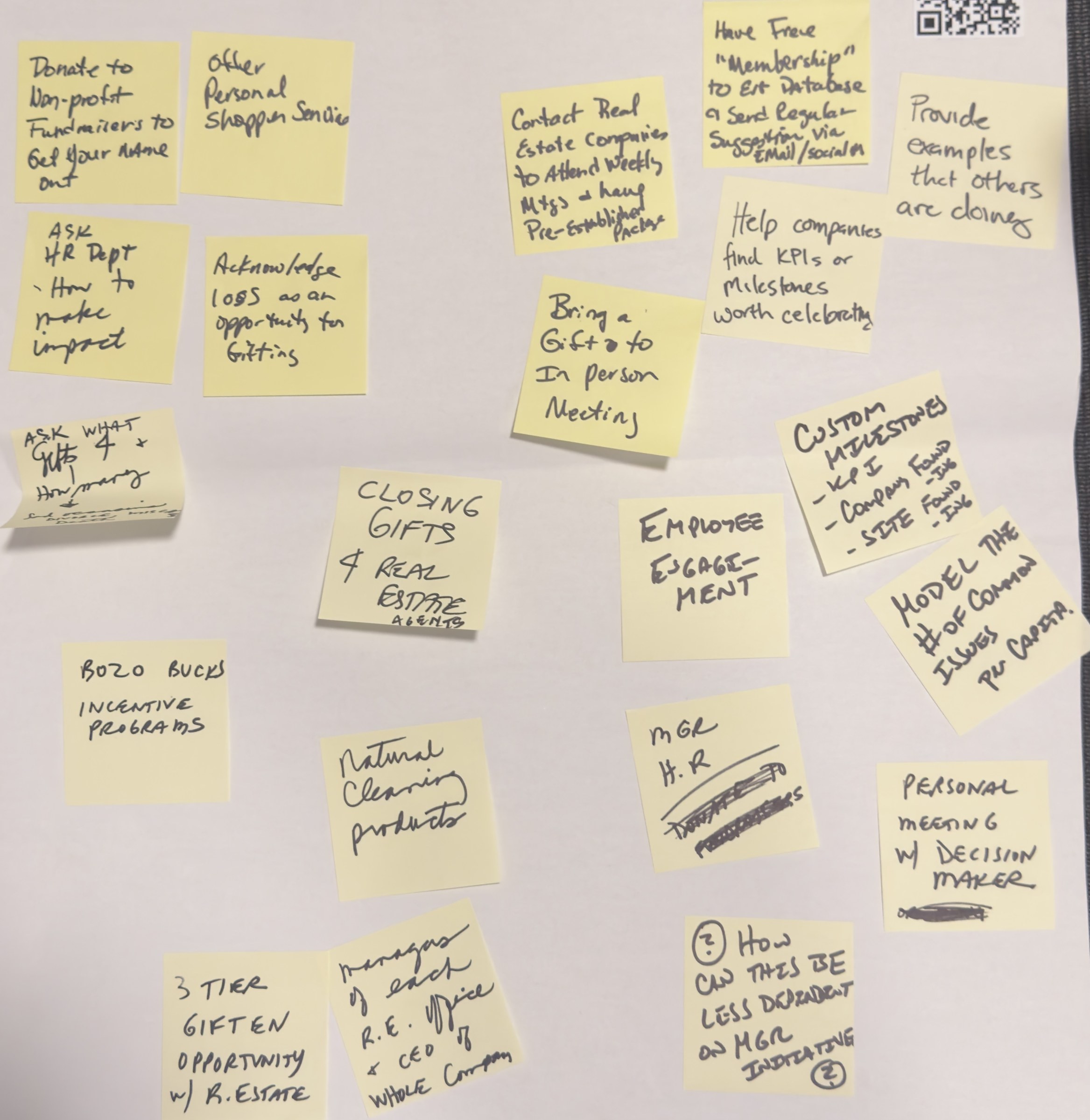
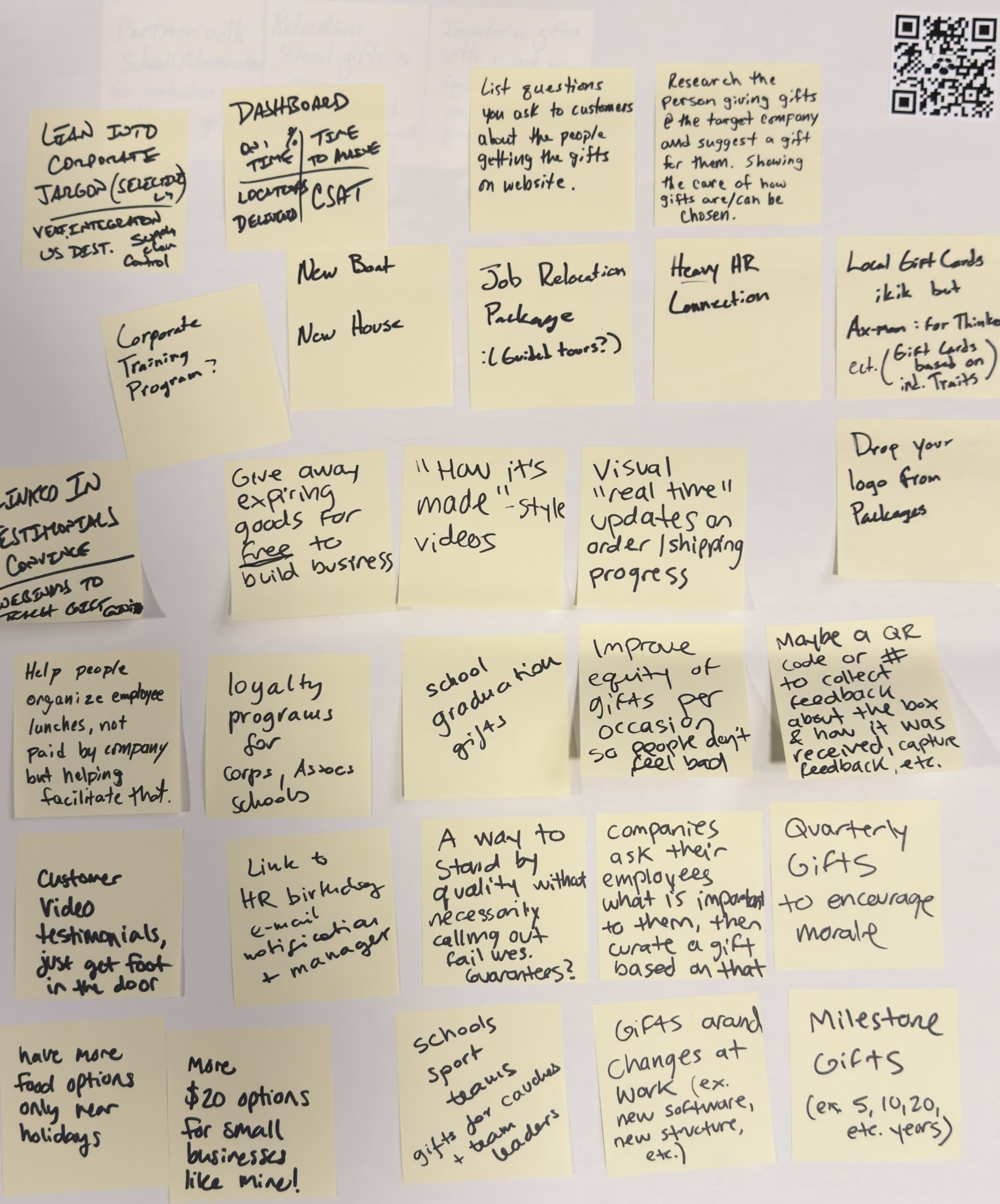
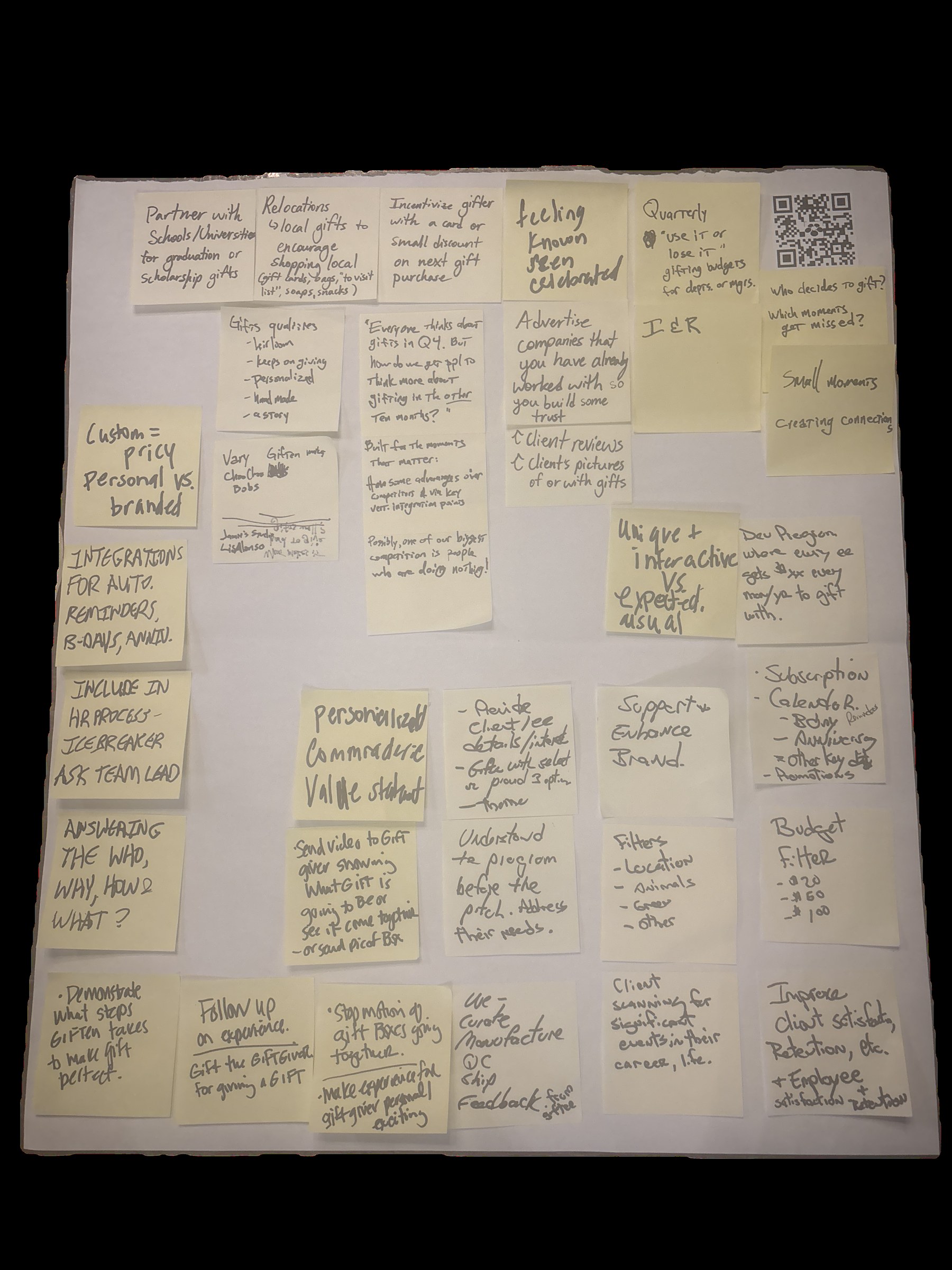
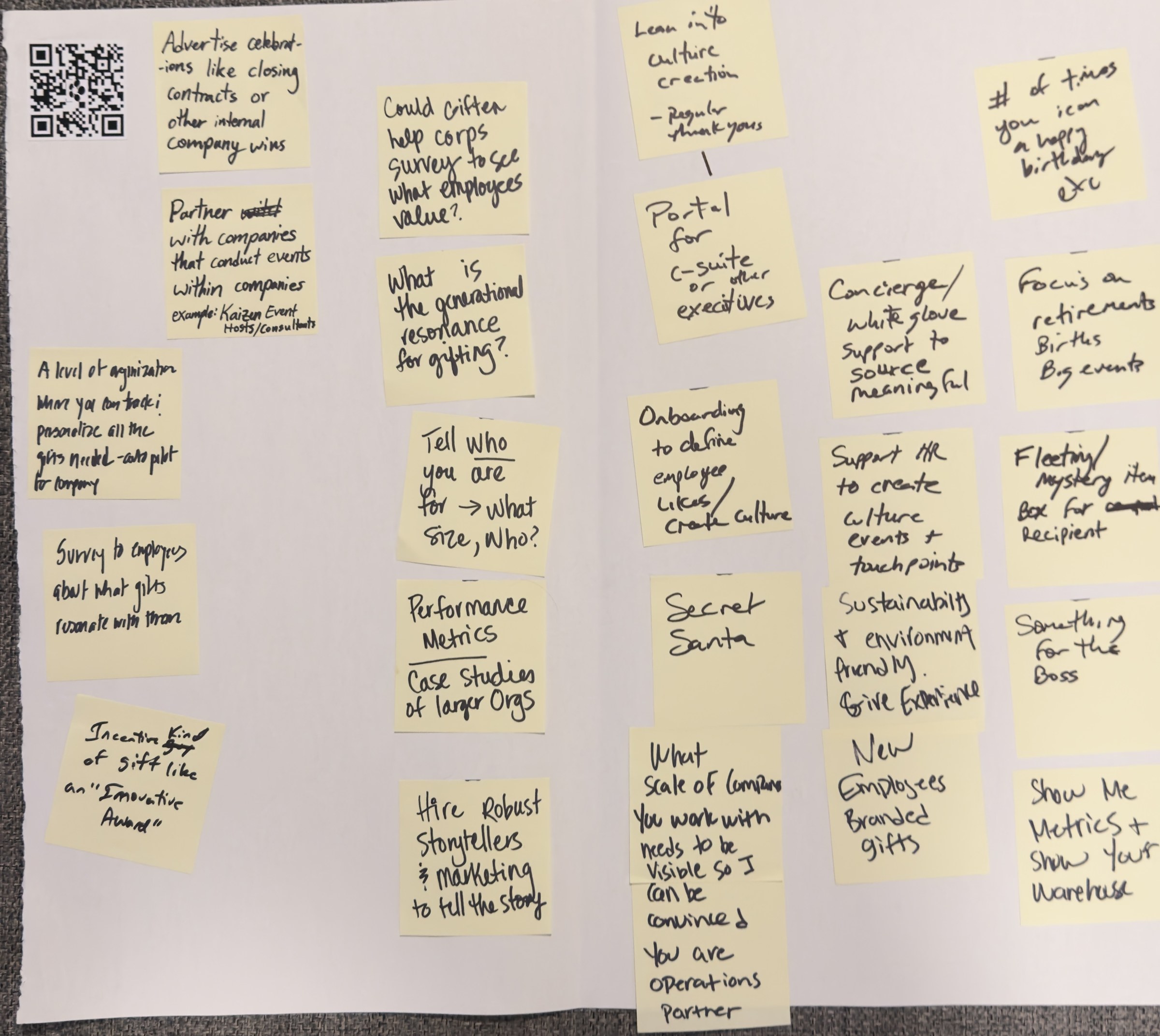
Idea Jam Analysis - Key Themes
JAM 1: Beyond December
What would motivate someone to sign up for an annual gifting program?
Theme 1: A Calendar Full of Moments
Members listed occasions companies could mark after December.
Ideas from the room:
Life events: weddings, relocations, retirements, hospitalization, loss
Work moments: onboarding boxes, milestone years, retreats, company wins
Helping companies spot their own milestones and KPIs worth celebrating
Key notes:
“Gifts around changes at work (ex. new software, new structure, etc.)”
“Advertise celebrations like closing contracts or other internal company wins”
Theme 2: Never Miss a Date
Members wanted dates captured once and reminders sent automatically.
Ideas from the room:
Linking to HR birthday notifications and managers
A calendar of birthdays, anniversaries, and other key dates
Rewarding people managers for entering employee dates
Key notes:
“Collect the dates”
“Start by focusing on employee start date.”
Theme 3: Programs Worth Signing Up For
The largest theme by far: program shapes, rewards for buyers, and reasons to come back.
Ideas from the room:
Structures: quarterly gifts, prepaid subscriptions of 3, 6, 9, or 12 gifts, a set budget per employee
Rewards: tiers, points, referral discounts, a free gift after a set number sent
Reasons to return: collectibles, mystery boxes, limited releases, Secret Santa (on two boards)
Key notes:
“Quarterly "use it or lose it" gifting budgets for depts. or mgrs.”
“More $20 options for small businesses like mine!”
Theme 4: New Buyers to Reach
Members looked for groups who already give often.
Ideas from the room:
Relationship businesses: realtors, vets, Air B&B owners, event planners
Schools and universities: graduation gifts, coaches, team leaders
Partners: trade shows, nonprofits, companies that host internal events
Key notes:
“Realtors are very relationship & send gifts all the time”
“Focus on finding the small business that doesn't have an HR dept. to help them recognize their Employees”
Theme 5: Who Decides, and Why They Say Yes
One board mapped the controller, budget approver, and purchaser as separate people. Others named reasons that could move them.
Ideas from the room:
Tools that help a purchaser make the case internally
Retention, engagement survey scores, and culture as reasons to fund a program
Learning the pain points of people managers and HR
Key notes:
“WOULD AN ANNUAL PROGRAM HELP MAKE COSTS MORE PREDICTABLE?”
“Understand what most companies are allowed to gift.. most have $$ limits”
JAM 2: More Than a Gift Box
What might convince you that Giften could run your company's whole gifting program?
Theme 1: Show Me the Proof
One table wrote "Proof" right on its poster. Members wanted numbers, scale, and other customers' words.
Ideas from the room:
A dashboard: on-time percentage, time to arrive, locations delivered, CSAT
Case studies from larger organizations
LinkedIn and video testimonials, client reviews, client photos
Key notes:
“Show Me Metrics + Show Your Warehouse”
“How do you measure the IMPACT of the gift PROG.”
Theme 2: Show the Process
Most buyers never see the warehouse. Members wanted it on camera.
Ideas from the room:
"How it's made" videos and stop motion of boxes coming together
Sending the gift giver a video or picture of their box
Visual order and shipping updates
Key notes:
“Video that Shows curated, care-filled process on website”
“Demonstrate what steps Giften takes to make gift perfect.”
Theme 3: Done For You
Buyers want a program to take work off their plate.
Ideas from the room:
Concierge support and personal shoppers
Portals inside company systems, with precoded cost centers
A database of employee favorites, budget filters, and an AI bot that builds baskets
Key notes:
“Needs No addt'l Managing”
“Giften can manage a database of "favorites" for employee groups -> easy to order!”
Theme 4: Teach Gifting, Know the Recipient
One board numbered seven notes into a process, from meeting the gifters to measuring impact.
Ideas from the room:
Training for gifters and managers, and webinars
Employee surveys, wish lists, and persona maps
Asking why someone is gifting and what they are trying to honor
Key notes:
“TRAIN the gifter to Identify the feels of The recipient”
“companies ask their employees what is important to them, then curate a gift based on that”
Theme 5: Say It and Sell It
Words to use and ways to get in the door.
Ideas from the room:
Language: "curator," selective corporate terms, being clear about who Giften is for
Sales: personal meetings with decision makers, understanding the program before the pitch
Reach: storytelling, media, website heatmaps
Key notes:
“Tell Who you are for -> what size, Who?”
“Send a gift that DEMONSTRATES that you are a great Gifter”
Innovative Ideas: What Stands Out
Teach People to Give Great Gifts. Supporting notes: “Train the Gifter on HOW to be a thoughtful gifter” and “WEBINARS TO TEACH GIFT GIVING”. Why This Stands Out: This asks Giften to make the buyer better at gifting, which shows expertise and builds a relationship with the person, not only the account. Martha named this one herself.
The Moments Audit. Supporting notes: “Moments Audit - Provide a form to fill out to determine giftable moments” and “Who decides to gift? Which moments get missed?”. Why This Stands Out: A company that fills it out sees its own missed moments, and an annual program becomes the natural next step.
Compete With Doing Nothing. Supporting notes: “Possibly, one of our biggest competition is people who are doing nothing!” and “How CAN THIS BE LESS DEPENDENT ON MGR INITIATIVE”. Why This Stands Out: The target shifts to inertia. If gifting depends on one busy manager remembering, the program has to remove that step.
The Real Estate Ladder. Supporting notes: “3 TIER GIFTEN OPPORTUNITY w/ R. ESTATE,” “managers of each R.E. office + CEO of whole Company,” and “CLOSING GIFTS 4 REAL ESTATE AGENTS”. Why This Stands Out: It is unusually concrete: a repeat occasion, a known place to meet buyers (weekly office meetings), and three levels to sell to. Martha named this one too.
A Template for the Purchaser. Supporting notes: “Create template to communicate with other decision makers in an org team”. Why This Stands Out: The person who wants a program often isn't the person who approves it. A ready-made internal pitch is cheap to build.
Thank the Gifter. Supporting notes: “Gift the Gift Giver for giving a GIFT” and “Incentivize gifter with a card or small discount on next gift purchase”. Why This Stands Out: These notes turn from the recipient to the person doing the work, who decides whether Giften gets called again.
Implementation Ideas
Near-term (next 30 days)
Build a one-page Moments Audit and try it with a few current corporate buyers.
Draft a template a purchaser can forward to their budget approver.
Film a short warehouse video and test it on the corporate page next to on-time numbers.
Medium-term (3-6 months)
Pilot an annual program with a few companies, testing quarterly gifts and budgets.
Test the real estate idea with one brokerage, from closing gifts up to office managers.
Run a first webinar on giving great gifts for managers and HR teams.
Long-term (6+ months)
Explore portals and HR integrations for automatic date reminders.
Develop a referral and loyalty program for repeat gifters.
Explore a collectible or limited-release line.
Key Challenges and Considerations
Automatic vs. authentic. “Automatic vs Authentic” was a note of its own. The more a program runs itself, the harder it is to keep the personal touch.
Team capacity. Concierge service, training, and sales meetings all take time from a small team.
Custom vs. cost. “Custom = pricy Personal vs. branded” captures it. Members asked for both personalized service and more $20 options.
Proof takes permission. Case studies and client photos need clients willing to be named.
Sensitive moments. Sympathy, illness, and loss need more care than a birthday.
You made it!

DISCLAIMER
The ideas, suggestions, and recommendations in this recap resulted from a collaborative brainstorming session conducted by Innovate MN community members. These concepts are based on limited information about the business operations, financial situation, market conditions, and customer base.
Recommendation: Before implementing suggested strategies or programs, the Spotlight Business should conduct thorough due diligence, including market research, financial analysis, and consultation with relevant professionals.
This recap is intended to provide creative inspiration and potential directions for further exploration, not definitive business guidance.